Understanding The New Geography Of Queer Identity And Power
The mid-2020s mark a turning point in global LGBTQ+ demographics. In 30 countries, about 9% of adults now identify as LGBTQ+, with even higher rates among younger generations. What was once a small, marginal minority is fast becoming a sizeable and politically consequential share of the population, especially in liberal democracies as Generation Z reaches adulthood.
This change is not happening everywhere at the same pace. In countries like the United States, Brazil, and the Philippines, surveys and online activity show that many young adults identify as LGBTQ+. In contrast, much of Asia, the Middle East, and Africa still reports low official numbers, even though there are active queer communities online. Meanwhile, the United Kingdom is in a difficult spot. Once seen as a leader in LGBTQ+ equality, the UK has dropped to 22nd place on ILGA Europe’s Rainbow Map in 2025, following policy changes that reduced protections for trans people and stalled reforms on conversion therapy and hate crime laws.
Domestically, the story is more complex. The latest UK data suggests that 3.8% of adults identify as lesbian, gay or bisexual, up from 2.2% in 2018, with more than 10% of 16 to 24-year-olds now describing themselves as LGB. London and Brighton are home to some of the highest concentrations of LGBTQ+ people in Europe. Yet, in legal rankings, in the competition for international talent, and in the cultural gravity of its queer districts, the UK is increasingly being outpaced by smaller but more progressive states such as Malta, Portugal and New Zealand.
This report situates the UK inside a wider 2025 state of the nation picture. It draws on public opinion surveys (Ipsos, Gallup), census evidence from Canada, the UK and elsewhere, behavioural data from platforms such as Grindr, and legal indices compiled by Spartacus, Equaldex and ILGA Europe. It focuses on percentages rather than raw headcounts, breaks down the key identity categories within LGBTQ+ communities, and considers how economics, urbanisation and security interact. Above all, it asks a simple question with complex implications: as other countries accelerate, is the UK still seen as a leading place to live, work and raise a family as an LGBTQ+ person?
Where LGBTQ+ Identification Is Highest In 2025
Rankings by the share of adults who identify as LGBTQ+ upend old assumptions about queer visibility. Survey data for 2024–2025 suggests countries such as the Philippines, the United States, Israel, and Thailand now top the global table. This is based on LGBTQ+ populations measured as a proportion of adults rather than absolute numbers. The methodology varies between surveys. Still, the pattern is consistent. Younger, urban, and digitally connected people drive sharp rises in identification.
In the Philippines and Thailand, long-standing cultural categories such as bakla and kathoey shape social scripts for non-conforming gender expression that predate Western LGBTQ+ terminology. This cultural familiarity, along with the high visibility of trans and gender diverse people in media and service industries, encourages honest self-reporting even where legal protections remain incomplete. In both countries, emerging legal debates over marriage equality lag behind the lived reality in which LGBTQ+ people form a familiar part of everyday life.
The United States tells a different story. Gallup estimates 9.3% of adults identify as LGBTQ+. This is almost double the share a decade ago. Among Generation Z, approximately 23% now identify as LGBTQ+. Bisexual women are the largest single group. This surge pushes national averages up, even as older cohorts are less likely to come out. Legal protections are fragmented across state lines and are increasingly contested.
Canada, Brazil, the Netherlands, Australia, Spain, and Germany form the next tier. Surveys place them in the mid- to high-single digits. Each country offers relatively high legal protection, but cultural integration varies. Dutch towns and villages show apparent normalisation, while Brazil’s urban centres are marked by politicised activism. The LGBTQ+ share depends not only on social tolerance but also on individuals’ willingness to state their identity in official surveys, which depends on trust in institutions.
The UK sits just outside these top percentage brackets. Official data indicate that identification is rising quickly among younger adults, particularly in university-age cohorts, yet the overall national share remains more modest than that of some peers. For policymakers, this matters. A country with a growing but still semi-closeted LGBTQ+ population looks different from one where queer identity is broadly integrated and visible across all age groups.
How Different Identities Shape The Numbers
Headline percentages hide that different identities within the LGBTQ+ spectrum contribute differently to national totals. Ipsos data for 30 countries shows, on average, that 3% of adults identify as lesbian or gay, 4% as bisexual, and 1% each as pansexual, omnisexual, or asexual. This pattern appears in many country profiles for 2024 and 2025.
Gay men remain the most visible and economically tracked group, particularly in cities that have established strong commercial scenes. Cities like Brazil, Spain, Australia, the Netherlands, and Canada report relatively high shares of men identifying as gay. Dense neighbourhoods, nightlife districts, and long-running Pride events bolster this visibility and embed gay culture in urban branding. In these places, gay identity often drives tourism strategies and powers creative industries, even when national politics turn turbulent.
Lesbian identification has historically been undercounted. This is partly because women face different social pressures and because research focuses on male spending power. Recent surveys highlight strong lesbian communities in Spain, Germany, Australia, the UK, and the United States. Especially visible clusters appear in Madrid, Cologne, Sydney, and parts of London. In several countries, robust feminist movements and access to assisted reproduction reinforce lesbian family formation.
Bisexuality is the fastest-growing category globally, driven by young women. In the US, bisexual people now form the majority of the LGBTQ+ population. Bisexual women in Generation Z report particularly high rates. The UK shows a similar pattern: among young adults who identify as LGB, most describe themselves as bisexual rather than exclusively gay or lesbian. This affects mental health services, relationship education, and community spaces, which have often been geared towards gay male models.
Transgender and gender diverse communities show volatile figures, reflecting shifts in language, legal recognition, and survey design. Canada’s 2021 census was the first to ask detailed questions about gender identity. It found that about one in 300 people aged 15 and over were trans or non-binary, with two-thirds under 35. Polling suggests high reported gender diversity in Thailand, Switzerland, Germany, Sweden, and India. Each country is shaped by different histories, ranging from traditional third-gender categories to recent self-identification laws.
Finally, there is a growing “long tail” of identities such as pansexual, omnisexual and queer, particularly in English-speaking and Latin American countries, where online culture has accelerated the spread of new terminology. The United States, Brazil, the UK, Canada and Mexico all show small but growing proportions of adults who reject traditional labels, a shift that complicates any simple attempt to freeze LGBTQ+ demographics into fixed categories.
Cities That Concentrate Queer Life And Influence
National averages tell only part of the story. LGBTQ+ populations are heavily concentrated in particular cities, which act as political laboratories, cultural exporters and economic engines. These urban centres set global trends in everything from nightlife and media representation to housing pressures and health care models.
San Francisco remains emblematic. While some younger queer people have been priced out by high living costs, the city still hosts one of the world's largest LGBTQ+ populations. Its long-established districts include an ageing cohort of gay men who survived the AIDS crisis. Tel Aviv occupies a comparable position in Israel. It serves as a liberal enclave in a region where LGBTQ+ rights are intensely contested. Support for Pride events, nightlife, and tourism branding has turned it into a Mediterranean magnet for young gay men.
Brazil’s São Paulo and Rio de Janeiro represent another urban pattern. São Paulo’s Pride parade regularly draws millions. Local studies suggest there are several million LGBTQ+ residents in the wider metropolis. Rio’s beachfront culture, especially around Ipanema, combines queer visibility with racial and class stratification. This shows how a large LGBTQ+ population can coexist with high levels of violence, especially against trans women.
For the UK, Brighton and Hove provides a striking case study. The 2021 Census showed that 10.7% of residents aged 16 and over identified as LGB+, the highest proportion of any local authority in England and Wales and well above the national average. It functions less as a transient party district and more as a long-term home for same sex families, older LGBTQ+ people and those seeking a relatively safe environment outside the capital.
Fun fact: Brighton and Hove recorded the highest proportion of LGB+ residents of any local authority in England and Wales in the 2021 Census, confirming its reputation as the UK’s unofficial gay capital.
London remains a major global LGBTQ+ city, with several boroughs among the top ten in England and Wales for LGBTQ+ populations. Yet its neighbourhoods now compete with Berlin’s nightlife, Madrid’s Chueca district, Amsterdam’s long-standing canalside scene and Sydney’s inner city suburbs for international attention. Each of those cities combines residential density, visible street life and a developed commercial infrastructure that feeds into tourism and creative exports.
The result is a shifting urban hierarchy in which UK cities are still influential but no longer unrivalled. For queer migrants deciding where to study or work, for global brands choosing where to invest in LGBTQ+ campaigns, and for activists seeking test cases for new policies, Berlin or Barcelona can now look just as attractive as London.
Bisexuality, Generations, And The Future Queer Majority
One of the most significant demographic shifts of the 2020s is the rise of bisexual identification and its interaction with age. In almost every large survey, women are more likely than men to describe themselves as bisexual, and younger respondents are far more likely than older people to claim any LGBTQ+ label at all.
In the United States, Gallup data shows that bisexuals make up more than half of the country’s LGBTQ+ population, with bisexual women in Generation Z at the forefront. Brazil and the Philippines show similarly high levels of sexual fluidity among younger people, where cultural norms already allow for a spectrum of attraction that does not always map neatly onto Western gay or straight binaries. Scandinavian countries, particularly Sweden, report rising shares of young people who describe themselves as bisexual or “not straight, even as they downplay the importance of fixed labels.
The UK fits this pattern. Official figures suggest that more than one in ten 16 to 24-year-olds now identify as LGB, and within that group, bisexual identity is dominant, especially among young women. This does not necessarily imply a wholesale move away from heterosexual relationships; many bisexual people are in different sex partnerships at any given time. It does, however, indicate a profound change in how younger Britons think about sexuality, attraction and the boundaries of community.
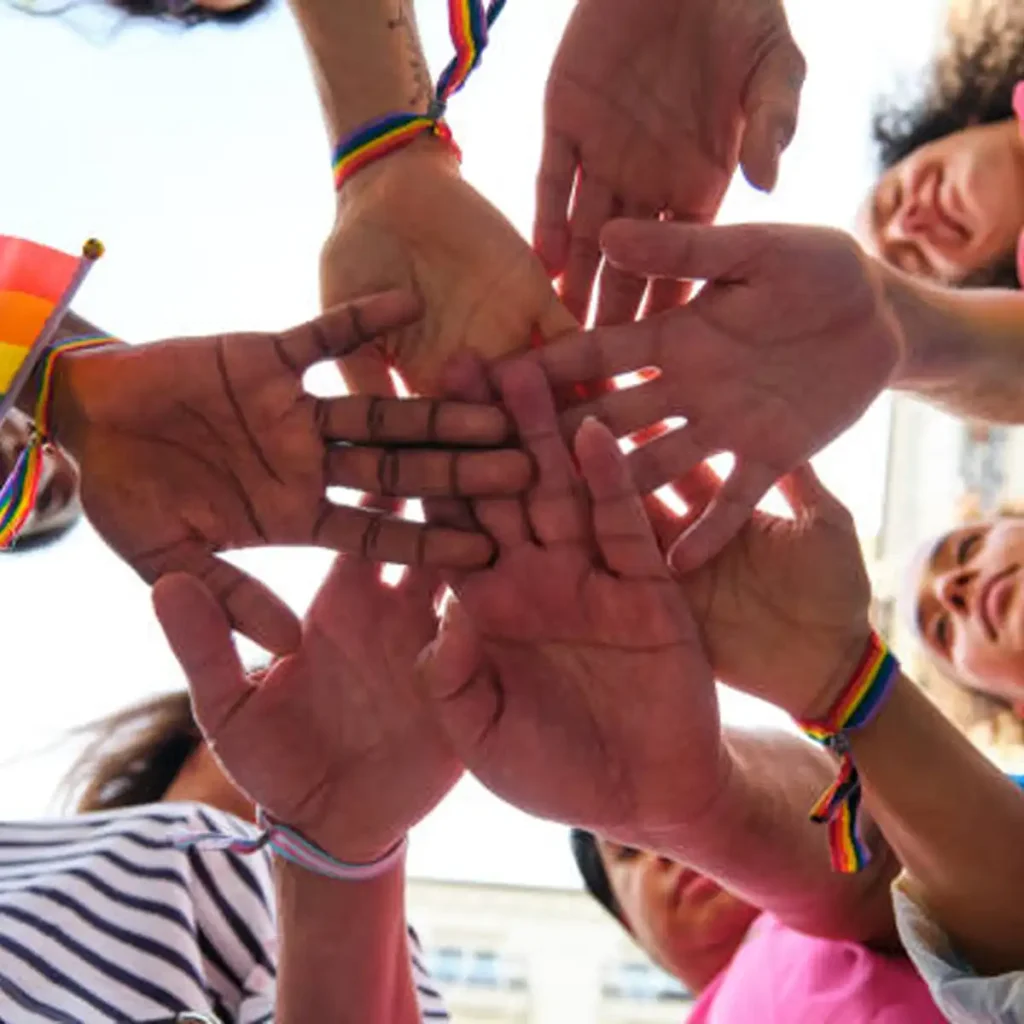
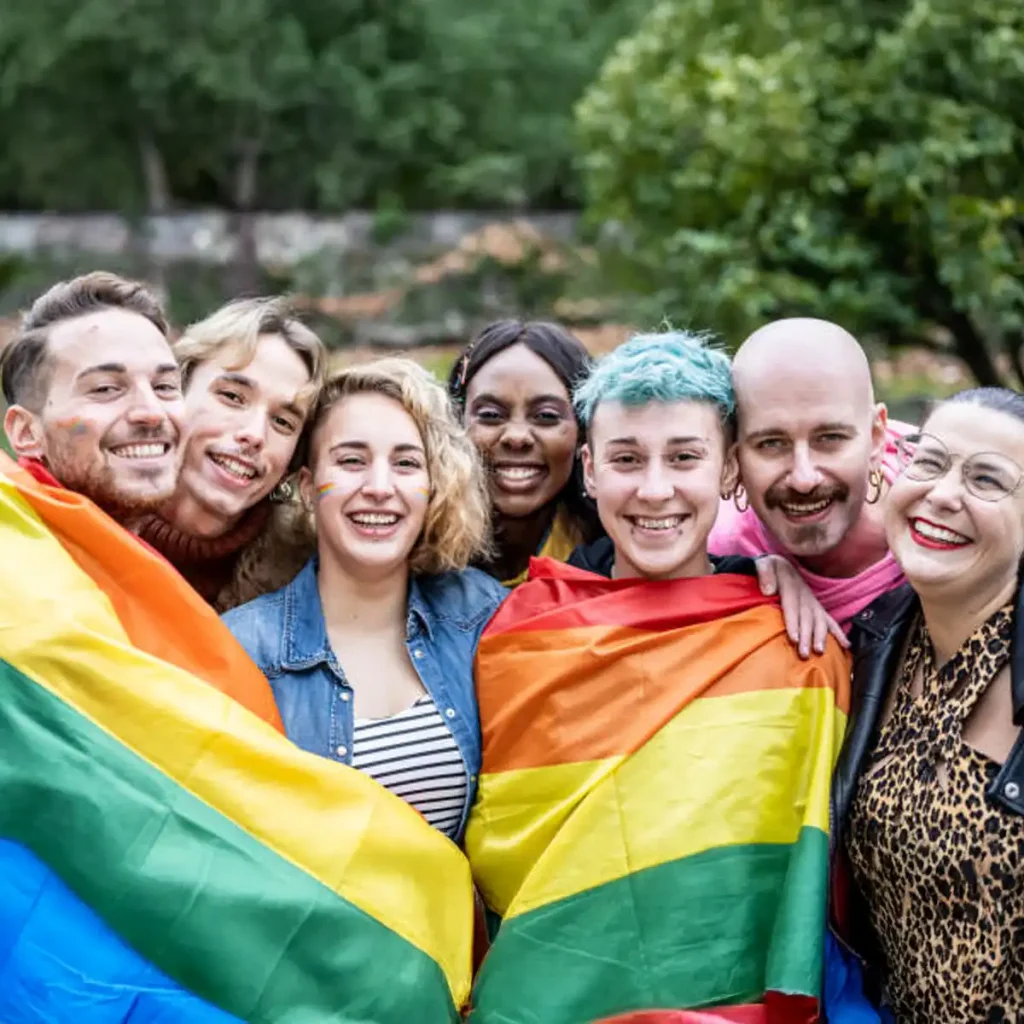
The generational gap is stark. In the UK, only about 1% of people over 65 describe themselves as LGB, compared with more than 6% of those aged 25 to 34 and over 10% of 16 to 24-year-olds. Similar step changes appear in North America and parts of Western Europe. This means that the future baseline LGBTQ+ share of the population in liberal democracies is unlikely to remain at 8 to 10%. As younger cohorts age, identification rates could settle closer to 15-20%, changing electoral coalitions, consumer markets, and family structures.
For the UK, this presents both an opportunity and a risk. A large, politically engaged cohort of queer and questioning young people could reenergise civic life and push for more inclusive policies. Yet if they perceive other countries as safer or more supportive, they may be more likely to study and work abroad, taking their skills and spending power with them.
Rights, Security, And The Uneven Map Of Protection
High visibility does not always equate to high safety. The Spartacus Gay Travel Index and legal databases such as Equaldex highlight a persistent mismatch between demographic vibrancy and legal protection. In recent editions, Canada, Malta, Spain, New Zealand and Portugal share the top positions, combining comprehensive anti-discrimination laws, marriage equality, protection for trans people and relatively low levels of recorded hate crime.
By contrast, countries such as Brazil demonstrate the “violence paradox”. Surveys suggest high levels of LGBTQ+ identification and some of the largest Pride events in the world, yet trans women and queer people of colour face extreme levels of violence and harassment. Improved documentation has made that reality more visible without necessarily improving safety.
The United States presents another complicated picture. While some states have robust protections and thriving LGBTQ+ communities, others have passed restrictive laws on education, health care and public expression, contributing to a lower overall ranking than many Western European peers despite their large and growing LGBTQ+ population.
The UK’s trajectory is perhaps the most instructive for policymakers. A decade ago, the country was near the top of ILGA Europe’s Rainbow Map, often cited as a model for other states. In 2025, ILGA Europe reported that the UK had dropped six places in a single year, now sitting in 22nd place. Analysts cited a Supreme Court ruling that narrowed the interpretation of sex in equality law, stalled moves on a conversion therapy ban, and deteriorating access to gender affirming healthcare as key factors.
This fall does not erase previous achievements, such as equal marriage and formal protection for sexual orientation in employment and services. It does, however, signal that progress is reversible and that legal stagnation can translate quickly into reputational damage. For a country whose soft power depends partly on the perception that it is a safe, welcoming place for diverse communities, the loss of status relative to Malta, Portugal, Spain and New Zealand should be taken seriously.
Intimacy Economics And The Invisible Closet Gap
Beyond rights and identity labels, two additional factors are reshaping the global LGBTQ+ landscape in 2025: intimacy patterns and economic power. Both are harder to measure and open to misinterpretation, yet they offer useful insight into how culture, class and law intertwine.
Behavioural data from platforms such as Grindr provides one window into intimate norms. Self-reported sexual roles among men who have sex with men vary sharply by country. In some conservative societies, such as parts of the Middle East, cultural scripts equate receptive sex with a loss of status, which encourages high reporting of “top” identity among those willing to use the app at all. In other contexts, including South Korea, Japan and Vietnam, surveys of app users suggest a much higher share of men identifying as “bottom”, reflecting media influences and different ideas of masculinity. Meanwhile, countries such as Germany, Finland and Australia report high levels of “versatile” identity, hinting at more relaxed attitudes to gendered roles in sex. These data are limited by who uses each platform, but they underline the point that culture shapes intimacy just as much as law does.
Economic analysis tells a parallel story. Estimates from LGBT Capital, Pride Co-op, and other market researchers suggest that the combined annual spending power of LGBTQ+ consumers worldwide exceeds trillions of US dollars, with particularly large markets in the United States, China, Japan, Germany, and the UK. In the United States alone, LGBTQ+ buying power is frequently estimated at $1.4 trillion per year, a figure that has attracted growing attention from brands and investors.
Yet the distribution of that wealth is uneven. Gay men in certain urban centres often enjoy higher average incomes and fewer childcare responsibilities, while trans people and queer women are more likely to be in precarious work or to face discrimination in hiring and housing. In countries such as Luxembourg, Norway, Switzerland and Denmark, high general living standards and strong welfare states provide a more supportive economic base for LGBTQ+ residents, but internal disparities remain.
Alongside these visible markets sits what some researchers describe as the “closet gap”. Comparing app usage with census data reveals that countries such as China, Turkey, India and Saudi Arabia have very large numbers of people engaging with same sex dating platforms, but very low shares of adults willing or able to identify as LGBTQ+ in official surveys. The implication is that the true size of the global LGBTQ+ population is significantly higher than current figures suggest, particularly in the Global South, and that repression does not eliminate queer life so much as push it into digital and informal spaces.
For policymakers in the UK and elsewhere, these dynamics matter. They determine where LGBTQ+ people choose to travel, study and invest. They influence where multinational employers locate inclusive workplaces. They shape how quickly legal change translates into lived security. And they highlight that legal equality alone is not enough if economics, housing and healthcare do not support real safety and autonomy.
What This New Landscape Means For The UK
Taken together, these demographic, legal and economic trends show a world splitting into two broad realities. In the West and parts of Latin America, the statistical share of people who identify as LGBTQ+ is rising rapidly, especially among young women and gender diverse youth. In much of Asia, the Middle East and Africa, official figures remain low, but digital footprints and long-standing cultural categories indicate large, undercounted communities that may push for recognition in the coming decade.
For the UK, the picture is mixed. On the positive side, the country has high and rising levels of LGBTQ+ identification among younger adults, dense queer populations in cities such as London and Brighton, and a history of legislative progress that has transformed daily life compared with the pre-decriminalisation era. Older LGBTQ+ people in the UK benefit from having “aged into” a more tolerant society, unlike their counterparts in regions where decriminalisation came later.
On the negative side, the UK’s slide down European rights rankings is not simply symbolic. It reflects concrete developments in equality law, healthcare access and political rhetoric, particularly around trans people. Other countries, some much smaller, have moved faster to ban conversion practices, simplify gender recognition, protect intersex people and embed LGBTQ+ inclusion into education and health systems.
The effect is that queer migrants, students and professionals now weigh the UK against destinations that combine strong legal frameworks with vibrant urban cultures, from Toronto and Vancouver to Lisbon, Auckland, Berlin and Barcelona. In this competition for people and ideas, perception matters as much as formal law. A reputation for drift or hostility can deter exactly the generation that is driving global LGBTQ+ growth.
The direction of travel for demographics is clear. For Generation Z in liberal democracies, a 10% LGBTQ+ share is no longer a ceiling; it is a starting point. As these cohorts enter their peak working and voting years, countries that offer security, recognition and economic opportunity will gain a durable advantage. Those who rely on past achievements while allowing rights to stagnate risk losing both influence and talent.
For the UK, the choice is straightforward, even if the politics are not. It can treat its drop in international rankings as a warning, re-commit to evidence-based policy, and harness the energy of its young LGBTQ+ citizens to renew its claim to leadership. Or it can allow the gap between its self-image and lived reality to widen, as other nations quietly become the preferred homes for the next generation of queer families, researchers and entrepreneurs.
In a world where queer identity is becoming a normal part of the human population rather than a small exception, the countries that thrive will be those that recognise LGBTQ+ people not as a side issue, but as an integral part of their social and economic future. The global map is redrawing itself; whether the UK appears as a bright, central marker or as a faded note in the margin will depend on the decisions taken now.
Continue Reading
All articles →Newsletter
Stay updated on Digital News