Prime Minister Andy Burnham appointed Kanishka Narayan as Minister for Artificial Intelligence on 20 July 2026, and the post attends Cabinet for the first time. Narayan holds the role jointly across the Cabinet Office and the newly created Department for Business, Innovation, Science and Trade, according to reporting by Bloomberg and The Next Web. The same reshuffle dissolved the Department for Science, Innovation and Technology, moving its functions into the new department under Jonathan Reynolds.
Narayan has represented the Vale of Glamorgan since 2024 and held the junior brief for AI and Online Safety from September 2025. He was born in Muzaffarpur, Bihar, and moved to Cardiff at the age of 12.
The appointment raises a question the first wave of coverage has largely skipped. Dedicated artificial intelligence portfolios have existed somewhere in the world since 2017. Very few of them carry Cabinet rank, no two of them hold the same powers, and several of the officials described in the press as an AI minister are not ministers at all. The brief also arrives with an institution already attached, the body examined in our earlier report on the role of the UK AI Safety Institute.
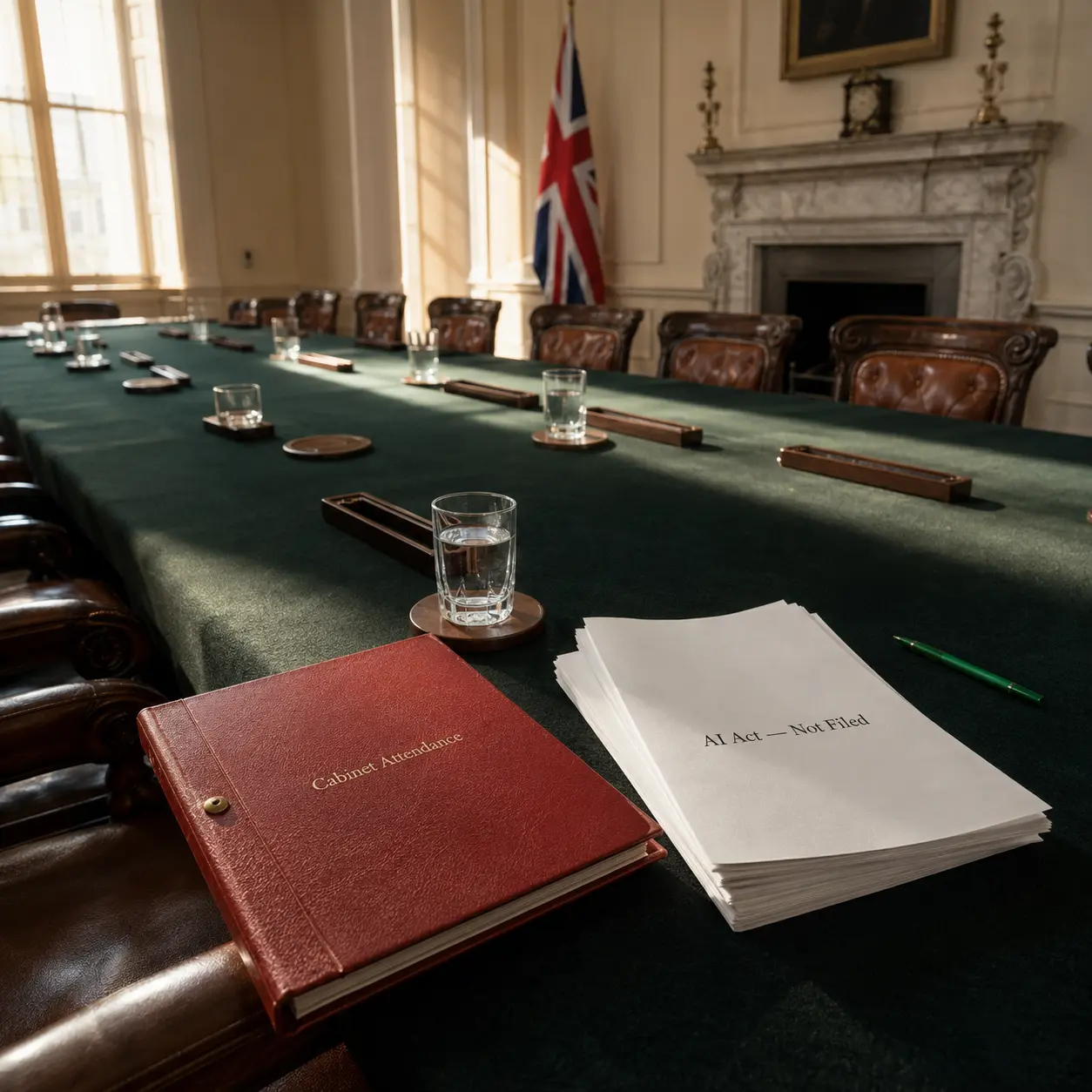
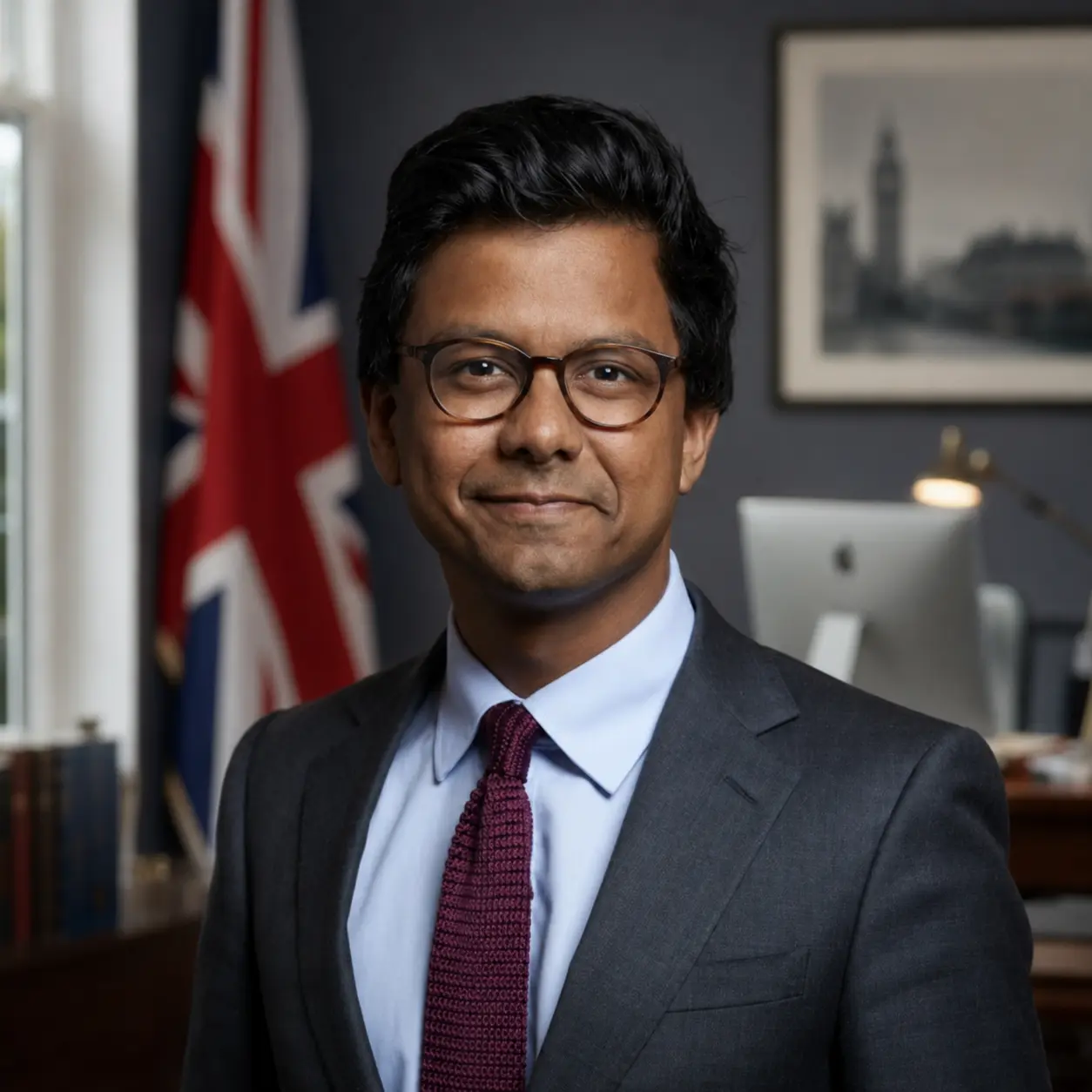
What changed in the July reshuffle
The AI minister now attends Cabinet, sits jointly in the Cabinet Office and the Department for Business, Innovation, Science and Trade, and takes a brief that existed at junior level until this month. The Department for Science, Innovation and Technology no longer exists as a standalone department.
The structural detail matters more than the personnel one. An AI minister housed in the Cabinet Office sits at the centre of government rather than inside a single delivery department, which in the British system usually signals a coordinating role across departments rather than a budget-holding one.
Placing the same person in a business-facing department at the same time is an attempt to hold both ends of the problem, the adoption of the technology across Whitehall and its commercial development outside it. Whether one post can do both is untested.
How many countries actually have one
At least 6 jurisdictions have created a named national post with artificial intelligence in its title, and only a minority of those carry the rank the phrase AI minister implies. The count below covers publicly announced appointments verified to named publications or official government pages as of late July 2026. It is a record of announced dedicated posts, not an exhaustive audit of every government on earth, and the category boundaries are contested.
Sorted by constitutional rank rather than by headline, the picture looks quite different from the way it is usually reported.
United Kingdom, Kanishka Narayan, Minister for Artificial Intelligence, attends Cabinet, appointed July 2026.
United Arab Emirates, Omar Sultan Al Olama, Minister of State for Artificial Intelligence, appointed October 2017 and expanded in July 2020 to cover Digital Economy and Remote Work Applications.
Canada, Evan Solomon, Minister of Artificial Intelligence and Digital Innovation, appointed May 2025.
Spain, María González Veracruz, Secretary of State for Digitisation and Artificial Intelligence, a sub-ministerial office.
Israel, Brigadier General (res.) Erez Askal, head of the National AI Directorate, appointed October 2025. This is an executive appointment reporting into the Prime Minister's Office, not a ministerial one.
Trinidad and Tobago, artificial intelligence named within the Ministry of Public Administration and Artificial Intelligence.
Three patterns come out of that list. A dedicated AI minister remains rare, with the posts still counted in single figures worldwide nine years after the first one. Most bundle artificial intelligence with digital economy, business or public administration rather than standing alone. And the rank varies so widely that comparing two countries by job title alone tells a reader almost nothing.
The British AI minister is unusual on the third measure. Cabinet attendance places it above the Emirati and Spanish equivalents in formal seniority, which is a genuine change in how a G7 government has chosen to organise itself.
How the job was invented in Dubai
The post did not begin in Washington, Brussels or London. In October 2017 the United Arab Emirates appointed Omar Sultan Al Olama as the world's first AI minister, formally Minister of State for Artificial Intelligence. He was 27 years old, and he had worked on the UAE's national AI strategy before taking the job, the first such national strategy anywhere.
Context: The world's first AI minister was 27 when appointed, and the office he took up had no precedent, no template and no counterpart anywhere else on earth.
The role was widened in July 2020 to take in digital economy and remote work applications, a drift from the specific to the general that has repeated almost everywhere the job has been copied since. Al Olama later added the director generalship of the Prime Minister's Office at the Ministry of Cabinet Affairs.
Canada followed in May 2025 with a full AI minister post at ministry rank. Israel took a different route in October 2025, creating a directorate under the Prime Minister's Office rather than a ministry, and its government approved a national AI programme in June 2026 that included a commitment to build capacity for roughly 100,000 GPUs. Britain arrived last among these, and arrived highest.
What the British post actually controls
The AI minister's brief covers national AI strategy, oversight of the AI Security Institute, semiconductor policy and the adoption of artificial intelligence across government and industry. It does not include a dedicated statute, because the United Kingdom has not passed one and does not currently intend to.
No standalone AI bill appeared in the 2026 King's Speech. The government instead announced a Regulating for Growth Bill, which places regulatory sandboxes on a statutory footing so that firms can test new systems under temporarily relaxed rules. Policy has run through AI Growth Zones and growth labs rather than through primary legislation.
The direction of travel is legible in the naming. The AI Safety Institute became the AI Security Institute, and existing regulators continue to apply data protection, competition, equality and online safety law to AI systems within their own remits. Narayan has made the point himself in his previous role that a considerable body of law already applies.
So the office is senior, coordinating and largely non-statutory. It convenes, it steers procurement, it speaks for Britain at summits such as the India AI Impact Summit, and it owns a security institute. It does not, on present arrangements, hold a rulebook.
The case that the title is mostly symbolic
The strongest argument against reading much into this is that machinery-of-government changes are cheap and frequent, while legislation is expensive and rare. A Cabinet seat for an AI minister with no statute behind it can be presented as an answer to a problem without the government having to decide any of the hard questions the problem contains.
That argument has force. The UAE precedent supports it, in the sense that the world's first dedicated AI ministry broadened within three years into a general digital economy portfolio. Dissolving a science and technology department in the same week as elevating an AI minister can also be read as a net reduction in departmental weight for technology policy, not an increase.
The counter-argument is narrower but harder to dismiss. Cabinet attendance changes which AI minister is in the room when spending and cross-departmental disputes are settled, and a coordinating minister with the Prime Minister's backing can move procurement and adoption faster than a regulator can move a rulebook. Both readings will be testable within a year, against departmental adoption figures and against whatever the Regulating for Growth Bill turns out to contain.
Who feels this first
British businesses that publish, advertise or sell into the European Union face the more immediate change, and it does not come from Westminster. Transparency obligations under the EU AI Act apply from 2 August 2026, including duties to label certain AI-generated material and to tell people when they are dealing with an AI system.
A UK company therefore answers to disclosure rules that its own Cabinet-level AI minister has not imposed and, on current policy, does not plan to. How that divergence changes the way policy questions get answered online is examined in a companion analysis of why answer engines favour official sources on policy, published by Teksyte.
Public sector suppliers feel it second, through procurement standards rather than statute. Universities and chip firms feel it third, through the growth zones and the semiconductor strand of the brief. Ordinary users of public services feel it last and most diffusely, when departments begin deploying systems whose oversight sits with a minister rather than a regulator.
None of that requires new law to happen, which is the point of the design.
What remains unsettled is whether the AI minister post survives its own creation. The Regulating for Growth Bill has not been published in full, so nobody can yet say whether the sandbox regime gives the minister genuine leverage or simply formalises existing practice. The AI Security Institute's remit is set by the government that owns it, and can be changed by the next one.
Two measures will resolve it. The first is whether the AI minister keeps Cabinet seniority through a spending review, which is where coordinating roles without budgets usually lose. The second is whether Britain's refusal of an AI act holds once the European transparency regime is running and British firms are complying with it anyway. Both answers should arrive within 18 months.
Continue Reading
All articles →Newsletter
Stay updated on Digital News