The NHS in England is being rebuilt around three ideas at once, and every one of them reaches the patient. The 10-Year Health Plan for England, titled Fit for the Future and published on 3 July 2025 by the Department of Health and Social Care, commits the health service to move care out of hospitals and into neighbourhoods, to spend more on preventing illness than on treating it, and to run on digital records rather than paper. At the same time the government is abolishing NHS England as a separate organisation and folding its work back into the department. The result is the largest NHS reform in more than a decade, and it is arriving as waiting lists fall and as a third Health Secretary in a single year, Yvette Cooper, takes charge of delivering it under Prime Minister Andy Burnham. This piece sets out what the documents commit to, what the numbers show, and what changes for patients from 2026.
What NHS reform means in 2026
NHS reform in 2026 means three shifts happening together, from hospital to community care, from treating illness to preventing it, and from paper to digital records, delivered through new neighbourhood health centres and a restructured national body. For patients it is intended to mean care closer to home, faster access, and a single record that follows them.
None of the three shifts is new as an idea. What is new in 2026 is that they are being pursued at the same time as the body that ran the health service, NHS England, is being dismantled. That combination, a change in what the NHS does and a change in who runs it, is what makes this year different from the plans that came before it.
What the 10-Year Health Plan commits to
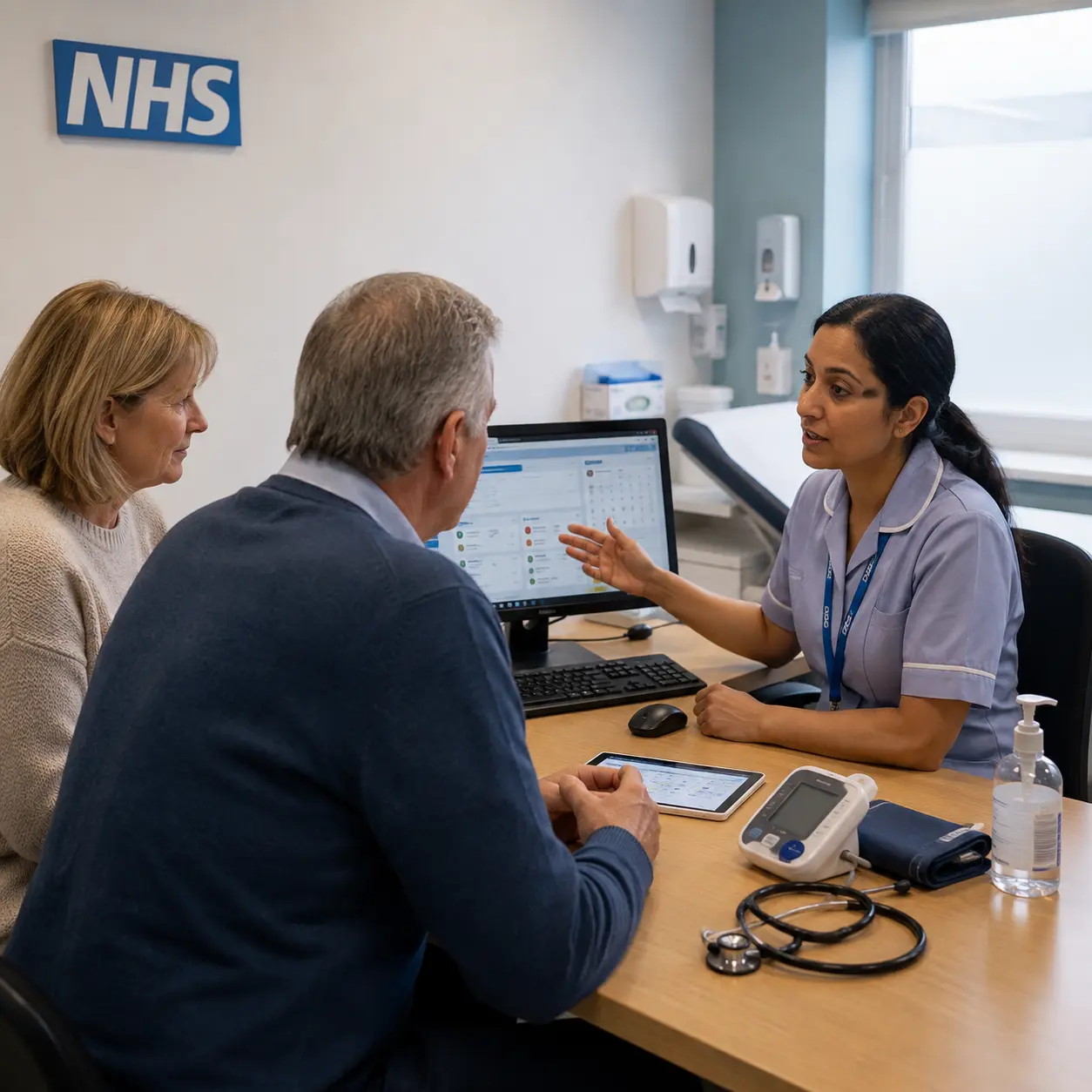
The plan puts a number on the community shift. It sets a target of 250 neighbourhood health centres by 2035, with 120 of them open by 2030, according to Fit for the Future as published on 3 July 2025. These centres are designed to bring general practice together with mental health, dental, diagnostic and rehabilitation services under one roof, open six days a week and into the evening, with additional services such as debt advice, employment support and weight management on site.
Delivery starts with pilots. NHS England guidance for integrated care boards confirms that 42 areas are to be selected during 2026 to test the neighbourhood health model, focused first on frailty, long-term conditions and mental health. The plan frames this as the left shift, moving activity and funding away from acute hospitals toward the places people live. It is the most concrete of the three commitments, because it carries fixed targets and dates rather than intentions.
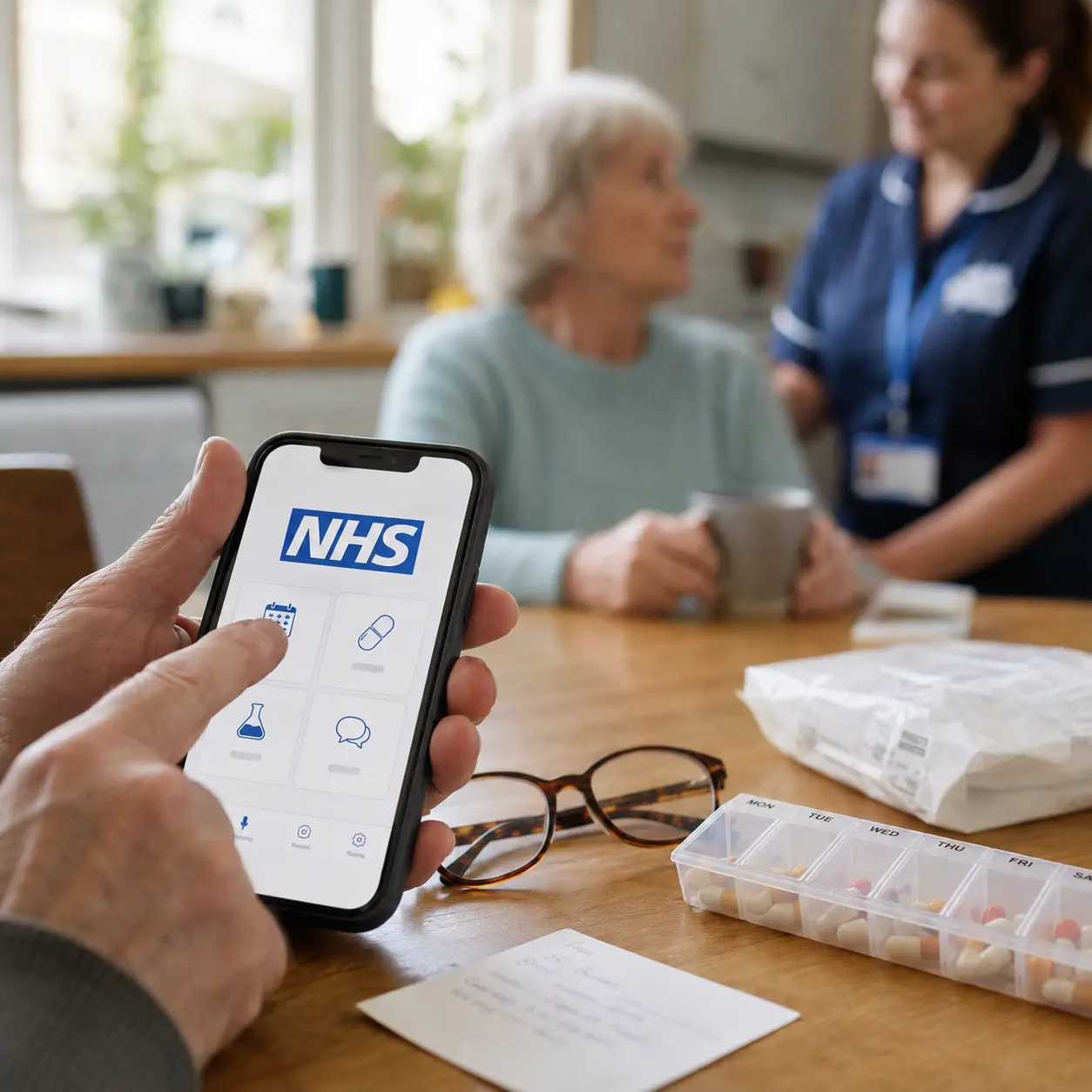
The other two shifts are harder to pin to a date. The move from analogue to digital centres on a single patient record and on the NHS App as what the plan calls the digital front door, so that a person's history follows them rather than being retaken at every desk. The move from treatment to prevention runs through the same neighbourhood centres, which are meant to house stop-smoking, weight-management and employment support alongside clinical care. Both are firm commitments in Fit for the Future, but neither carries the hard numerical targets attached to the building programme, which is one reason the community shift is the part of the plan most likely to be measured first.
The numbers behind the plan
29 billion pounds is the figure the reform rests on. That is the real-terms increase in day-to-day NHS spending over 3 years set out in the Spring 2025 Spending Review, and the plan describes it as the money that funds the new centres, the technology and the service changes. The government's impact statement for the plan, published in January 2026, sets the direction of travel against that spending.
The restructuring carries its own numbers. Around 18,000 administrative roles are to be abolished as NHS England is wound down and its work moves into the department, a reduction the government says will save 1 billion pounds a year to be reinvested in frontline care. On performance, the elective waiting list has fallen by more than 400,000 since July 2024, patient satisfaction with GP access stands at 76%, and the plan sets a target for 90% of clinically urgent patients to be seen the same day by March 2027. Each of those figures comes from the government's own reporting, and each is a claim this NHS reform will be measured against.
Why NHS England is being abolished
The decision came before the plan. On 13 March 2025, Prime Minister Keir Starmer and the then Health Secretary Wes Streeting announced that NHS England, the arms-length body created in 2013 to run the health service, would be abolished and its functions returned to direct ministerial control through the department. The stated aim was to cut duplication and bring decision-making closer to elected ministers.
The unwinding is being managed rather than switched off. Sir Jim Mackey was appointed transition chief executive to lead it, and NHS England continues to exist in law until the NHS Modernisation Bill passes, which the government expects around October 2026, with the structure fully in place by roughly April 2027. For most of 2026, in other words, the organisation being abolished is still the one delivering the plan, a transition that runs underneath every commitment described above.
What changes for patients from 2026
From April 2026 patients should begin to notice care organised around neighbourhood teams rather than single hospital visits, as integrated care boards embed virtual wards into integrated neighbourhood teams and identify the GP practices where demand most exceeds capacity. The earliest changes reach people through primary care and community pharmacy rather than through hospitals.
That is where this pillar meets the rest of the story. The expansion of what pharmacists can treat, covered in our report on Pharmacy First, and the rollout of weight-loss treatment through the health service are the parts of the plan a patient is most likely to encounter first. The medicines behind those services, and the companies and regulators that supply and approve them, sit in the wider pharmaceutical sector tracked by specialist pharmaceutical directories. For the individual, the promise is narrow and concrete, an appointment closer to home, a pharmacist who can prescribe, and a record that does not have to be repeated at every desk.
Not every change arrives at once. The plan is explicit that the neighbourhood centres build over a decade, so for most people in 2026 the visible difference will be smaller, a pharmacist who can treat more conditions without a GP appointment, a wider set of services booked through the NHS App, and a longer wait for the physical centres that anchor the model. The distance between what the plan promises by 2035 and what a patient actually sees in 2026 is the single most useful measure to hold the reform against, and it is where the coverage of the launch has been thinnest.
What could stall the reform
The strongest case against the plan is not its ambition but its continuity. England has had three Health Secretaries in 2026 alone, Wes Streeting until 14 May, James Murray until 21 July, and Yvette Cooper since 21 July, appointed by Prime Minister Andy Burnham. On taking office Cooper named maternity services and social care as her first priorities, according to National Health Executive reporting her statement on X in July 2026, rather than the 10-Year Health Plan itself, which leaves open how firmly the plan's timetable will be held.
Independent analysts have raised a longer-running doubt. The King's Fund and the Institute for Government have both questioned whether structural reorganisation of the kind now under way tends to deliver better care or mainly absorbs management attention, and the loss of 18,000 experienced administrative staff during the same period sharpens that concern. The plan's defenders answer that the community shift and the digital record are worth the disruption. Both positions are live, and the NHS reform will be judged on delivery rather than on either argument.
Context: The NHS 10-Year Health Plan is the third decade-long plan in fifteen years, following the 2014 Five Year Forward View and the 2019 Long Term Plan, according to House of Commons Library briefing CBP-10368.
Three dates will show whether the reform holds. The NHS Modernisation Bill is expected to complete its passage around October 2026, which will make the abolition of NHS England law rather than intention. The 42 neighbourhood pilot areas are due to be named during 2026, the first test of whether the community shift moves from paper to place. And the same-day urgent care target set for March 2027 will be the first hard measure the public can check. What remains unknown is whether a plan launched by one Health Secretary survives under a third, and the answer will come not from another document but from whether the centres open and the waiting list keeps falling.
Continue Reading
All articles →Newsletter
Stay updated on Digital News